Luxury Repair & Material Care
Damage is never just a spot; it is a chapter in the garment's history. This branch is about reading what has been hurt before deciding what to restore and what to keep.
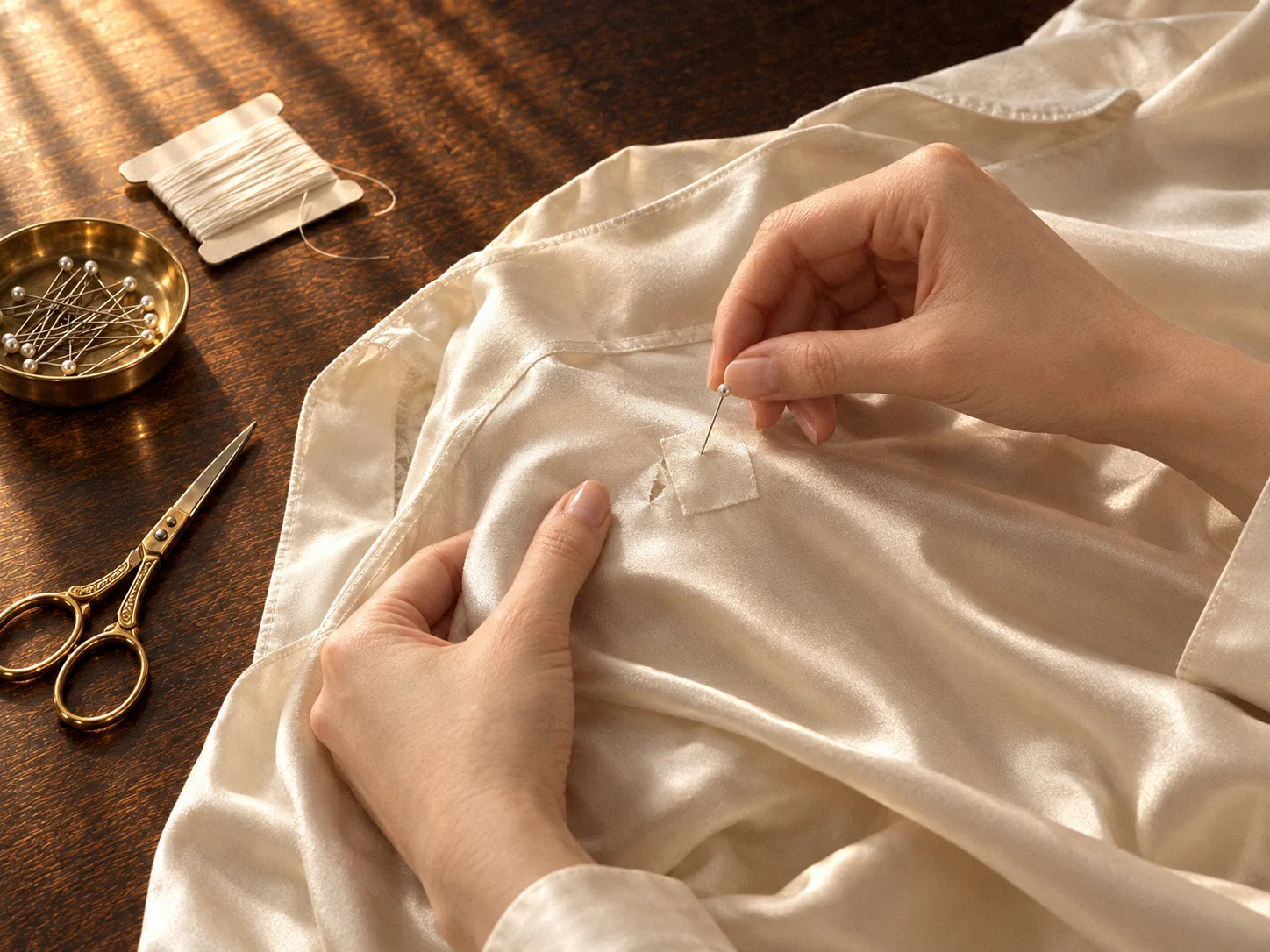
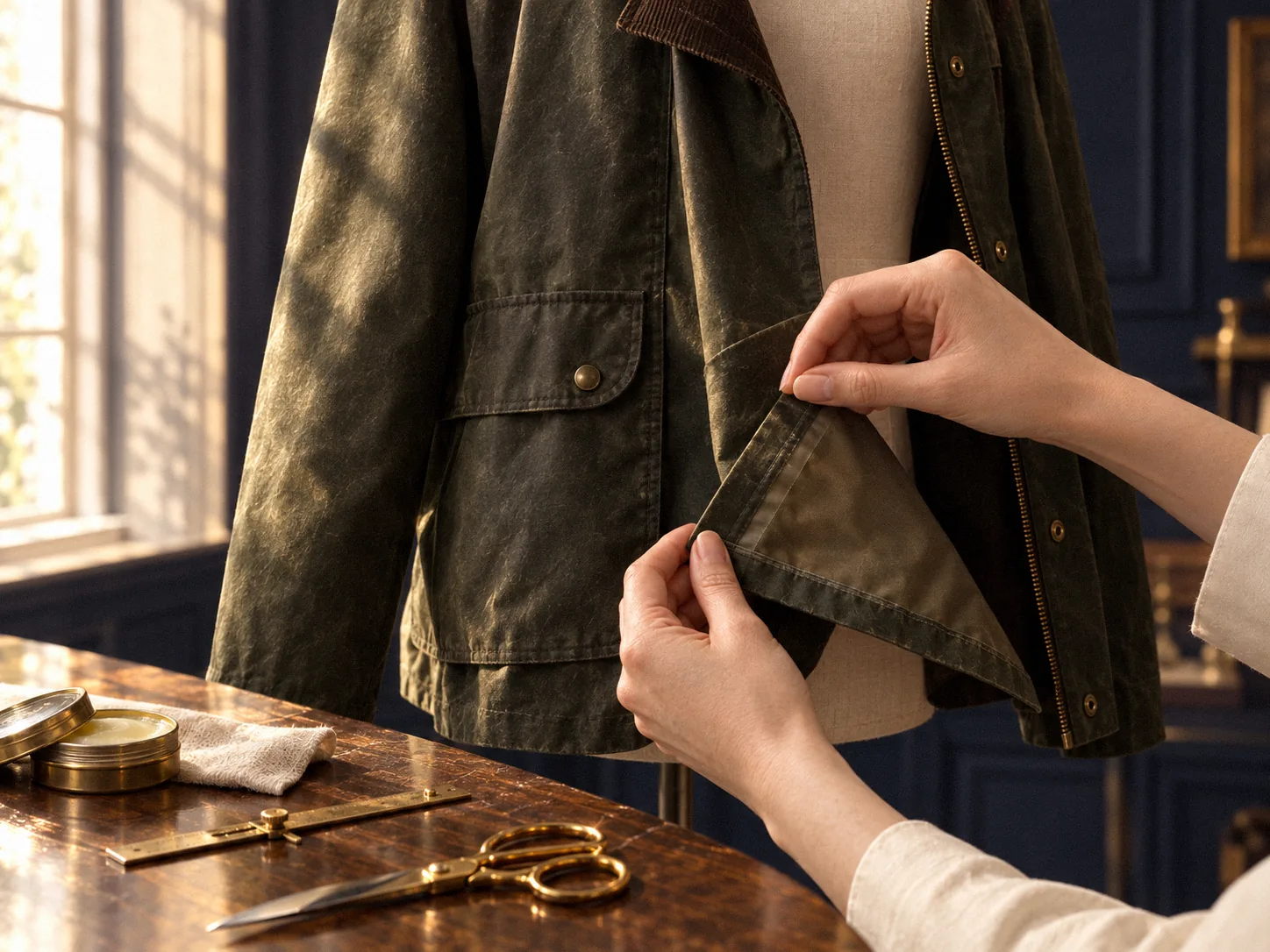
24 knowledge cards in this branch
Each card answers one question clients often ask: a direct answer first, then the judgement behind it. Open a card by its title; every card has its own link, so you can share it with a friend or family member.
Cards are the short form of the guides. If your garment is in a more complex state, read the related guide first, then book an assessment.
E092How are holes and tears handled?
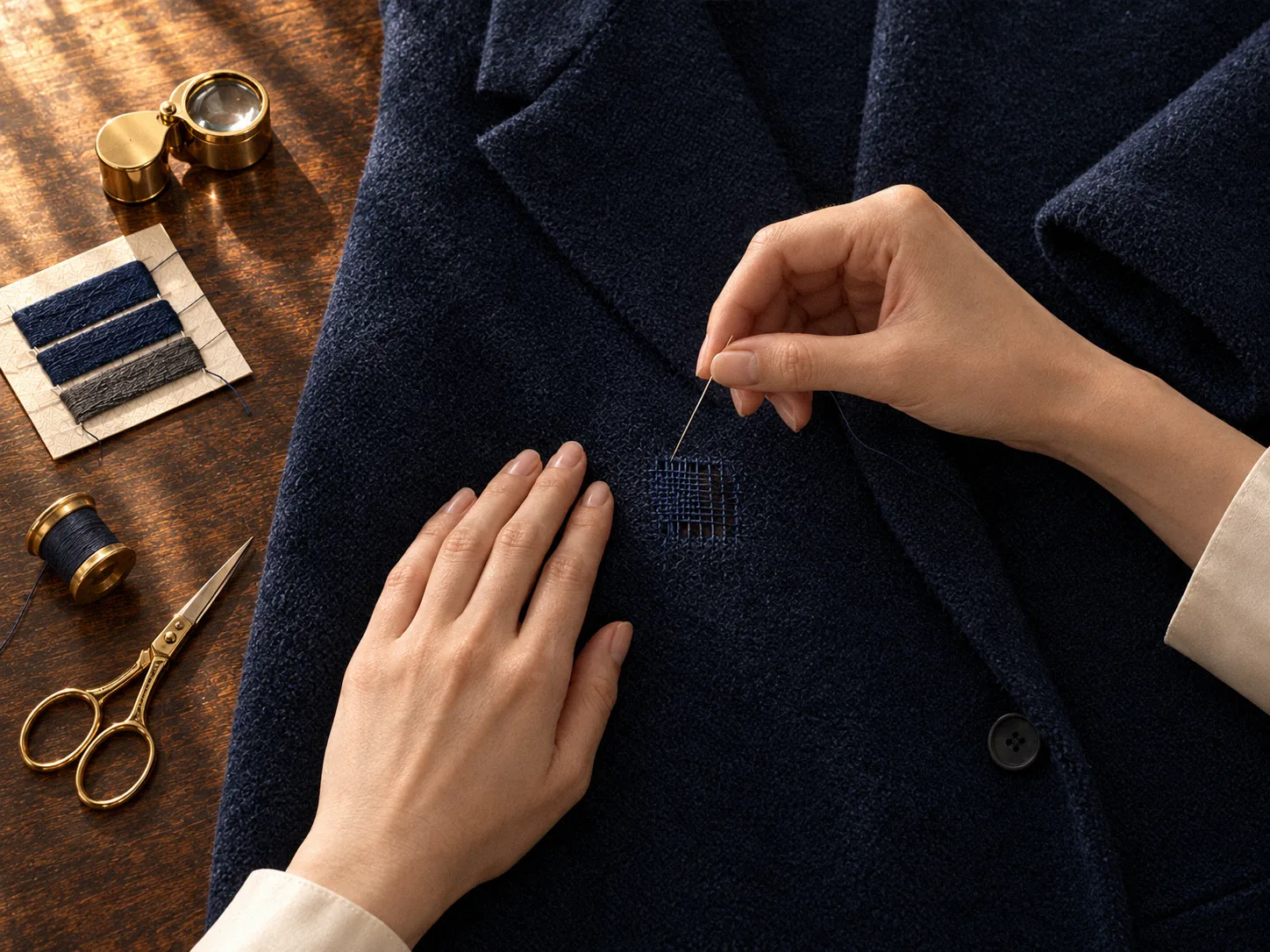
It depends on where the hole sits, the weight of the fabric and the strain around it. Load-bearing areas are reinforced from inside first; light fabrics take invisible stitching or a patch; heavier cloth can be rewoven or pieced.
We check whether the tear runs along the grain, whether it sits near a seam or panel edge, and whether the surrounding cloth has thinned. On shoulders and seams, simple stitching soon reopens. Where the fabric has weakened throughout or the pattern cannot be matched, we suggest recutting or redesign.
Link to this card · E092E093How is a burst seam repaired?
We open the lining first to read the original seam allowance, stitch direction and interfacing, find out why it burst, and then decide between restitching and reinforcing.
A local burst can be restitched with matching thread at the original spacing, with a small backing inside to spread the load. If the cause is a tight fit or uneven support, we suggest addressing the fit as well or it will burst again. Jackets with canvas and sleeve heads may need part of the lining opened.
Link to this card · E093E094How is a loose button dealt with?
It is not just sewing it back. We check the buttonhole and the interfacing behind the button first; if it has worn thin, a small backing is added before the button is secured with multiple strands.
Thread follows the original colour and weight, and the stitch suits the button material: shell, metal or resin. A lost button is first sought from the brand; if it cannot be matched we suggest replacing the set for consistency. Concealed buttons and hooks are restored to their original construction.
Link to this card · E094E096Does a torn or worn lining need attention?
Yes. The lining takes friction, protects the outer cloth and helps the garment slide on; once worn, it loads the outer layer and seams unevenly. Small areas can be pieced; a lining that has weakened throughout is better replaced.
A replacement lining is chosen for compatible friction, weight and stretch, and the original construction and details are kept. For formalwear and frequently worn pieces we lean towards a more stable, hard-wearing lining.
Link to this card · E096E098What about snags in silk and fragile fabrics?
A snag must not be pulled flat. We first check under light whether it is a surface pull or a broken fibre, then draw the raised fibre through to the back with a fine needle or support it from inside with a featherweight backing.
Where fibre is missing, we fill with matching fibre or a tiny patch. On lace, sheer or embroidered areas the rhythm of the original pattern must not be disturbed. If the fabric is fragile throughout, we suggest wearing it less or re-using the section as a lining detail.
Link to this card · E098E099How is a leather garment assessed?
We first identify the leather (full hide, pieced or bonded) and the surface finish (dyed, coated, printed), because these decide whether a scratch can be re-coloured and whether a tear can be stitched.
Small scratches on natural hide can be re-dyed and burnished; colour repairs on coated leather are harder to hide. A split seam depends on whether the hide is still thick enough to hold stitching. Leather cracked to the fibre layer, or with widespread coating loss, usually needs a replacement panel.
Link to this card · E099E100How are knits and cashmere repaired?
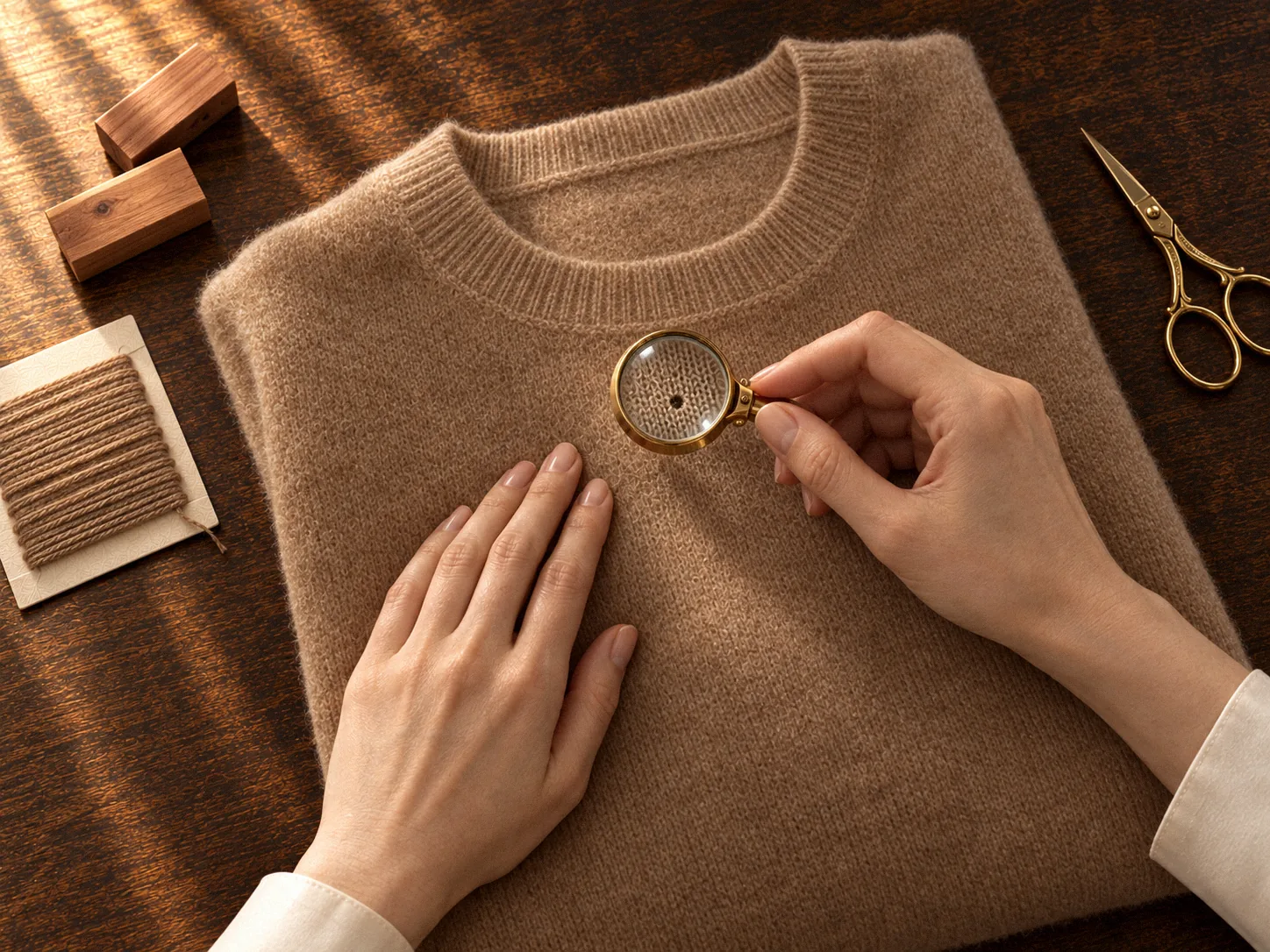
We follow the stitch direction to see whether the loops are continuous. A single dropped loop can be picked up and secured; several damaged rows or broken yarn call for reweaving or filling with matched yarn.
With cashmere the hand and gauge matter: yarn of the wrong weight shows and feels wrong. Small holes are worked from the back and the surface lightly brushed; larger areas may be pieced or turned into a detail. Where the yarn has aged throughout, only an in-person check can tell.
Link to this card · E100E101What are the options for denim?
It depends on use: for everyday wear we reinforce from inside with dense stitching; where looks matter we use a matched or contrasting patch and work the fading and fraying so the repair becomes part of the design.
Seat, knee and crotch carry different strain and need different solutions. A heavy patch changes the line of the leg; stitch placement affects how the knee creases. Denim washes vary widely, so colour matching is judged on the garment.
Link to this card · E101E102What matters with tweed and bouclé?
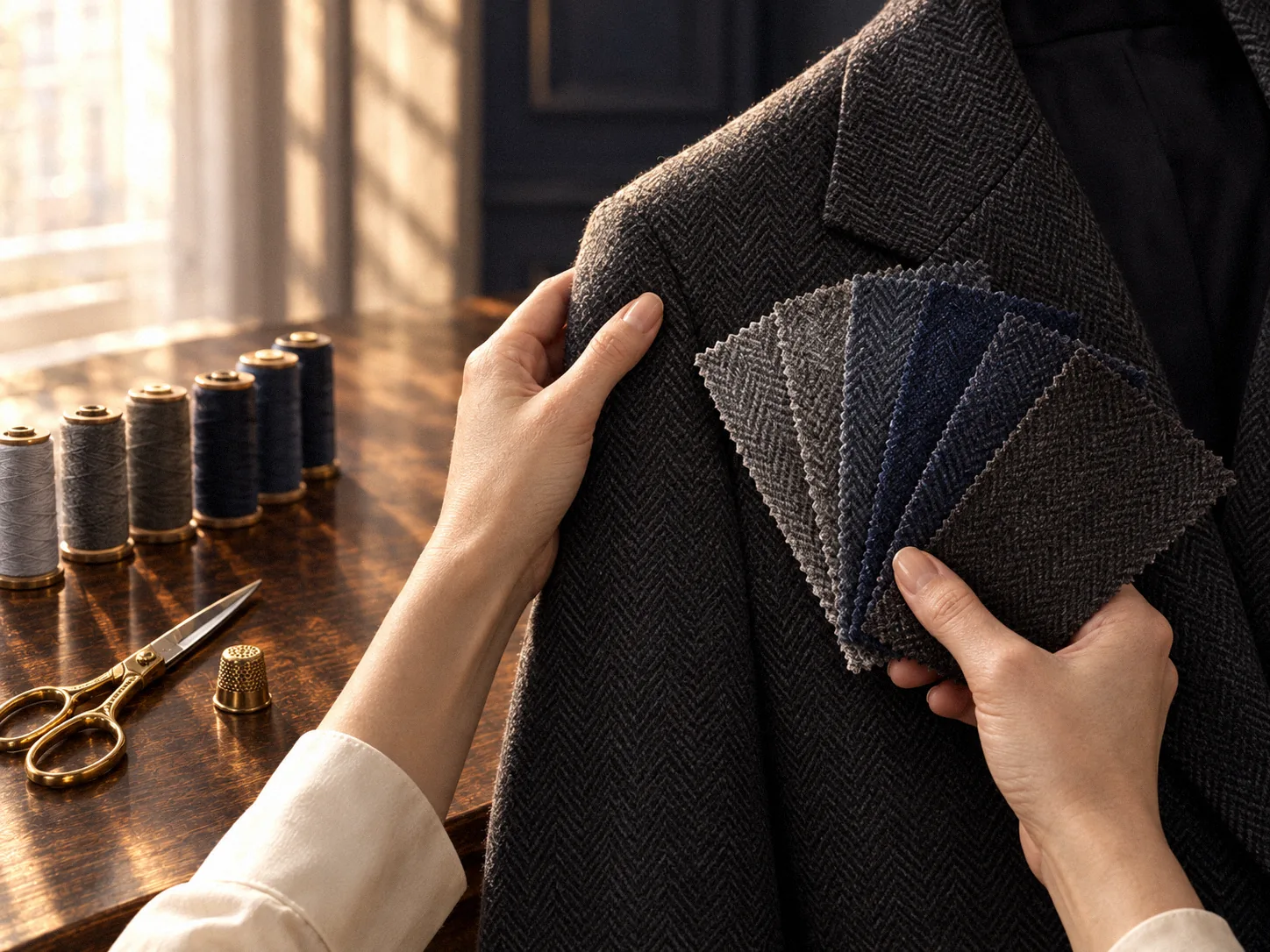
Preserve the direction of the texture and the floating yarns. Patches are aligned to the pattern and fixed by hand in layers; a machine needle would drag and loosen the yarn.
Without original cloth we piece small irregular sections, blending the floats with hidden stitches or hand reweaving. On bold patterns the join sits at a panel seam or fold. Collars and pockets on formal jackets must be discreet; casual pieces can carry a more visible repair.
Link to this card · E102E103There is a stain. What should I do first?
Have the stain treated first by a cleaner experienced with that fabric; the studio then checks fibre strength and colour before deciding whether a patch, re-dye or reweave is needed.
Oil, protein, dye bleed and chemical discolouration each need a different treatment; the wrong one sets the stain. Tell the cleaner the garment's history and anything already applied. If a stain cannot be removed and affects bonding or colour consistency, the repair plan changes.
Link to this card · E103E104Invisible or visible repair: how do we choose?
Formalwear and fine fabrics lean towards invisible repair; heavier pieces, or garments whose story you want to keep, can carry a visible repair as part of their design. We test a small area first and judge the thickness and pucker before deciding.
Invisible work relies on thread colour, a flat join and a supporting backing with fine hand stitching. Visible work uses contrasting cloth or decorative stitching. The final choice is bounded by available material and acceptable colour difference, confirmed on the garment.
Link to this card · E104E106What if there is no original fabric?
We first define the goal: restore function, stay as invisible as possible, or accept a creative patch. Then we propose cloth of similar texture, tone and construction and show you a small test repair.
Functional repair is readily achieved; sheen and the marks of washing are the hardest to match. For discretion we choose similar weight and weave and blend with thread colour; for a visible repair, contrast can be used. You decide what is acceptable in front of the actual piece.
Link to this card · E106E107Repair, or leave it as it is?
When fibre is badly weakened, seams are failing or a repair would alter the structure, conservation is the safer path. Stitching and cleaning can themselves cause new damage.
We examine the break points under magnification, test how a small stitched area takes strain, and consider whether a patch changes the load. Where the risk is high, we stabilise first with a supporting lining or stitch-free fixing, then consider a more reversible repair. Treasured pieces call for particular care.
Link to this card · E107E108How is a treasured garment assessed for repair?
Preserving the original comes first. We clarify your priorities, photograph the garment as it is, make a small trial to show the visible trace and any structural change, then agree the degree of intervention.
Where the original must be kept, we use hidden support, removable patches or minimal stitching; where slight change is acceptable, reweaving or decorative stitching adds durability. Every step is recorded. Some marks are history in themselves; whether to remove them is decided together.
Link to this card · E108E109How do I make a repair last?
Follow the studio's advice on how often to wear it, avoid strain on the repaired area, clean as instructed, and check the repair regularly so that any loosening is caught early.
A fresh seam or patch should not face hard friction or frequent washing straight away. Heavy coats go on wide hangers; fine pieces lie flat or use shoulder covers. We note the recommended wear and care at collection; some materials are sensitive to home washing and must be treated as advised.
Link to this card · E109E112Replacing a zip: looks or structure?
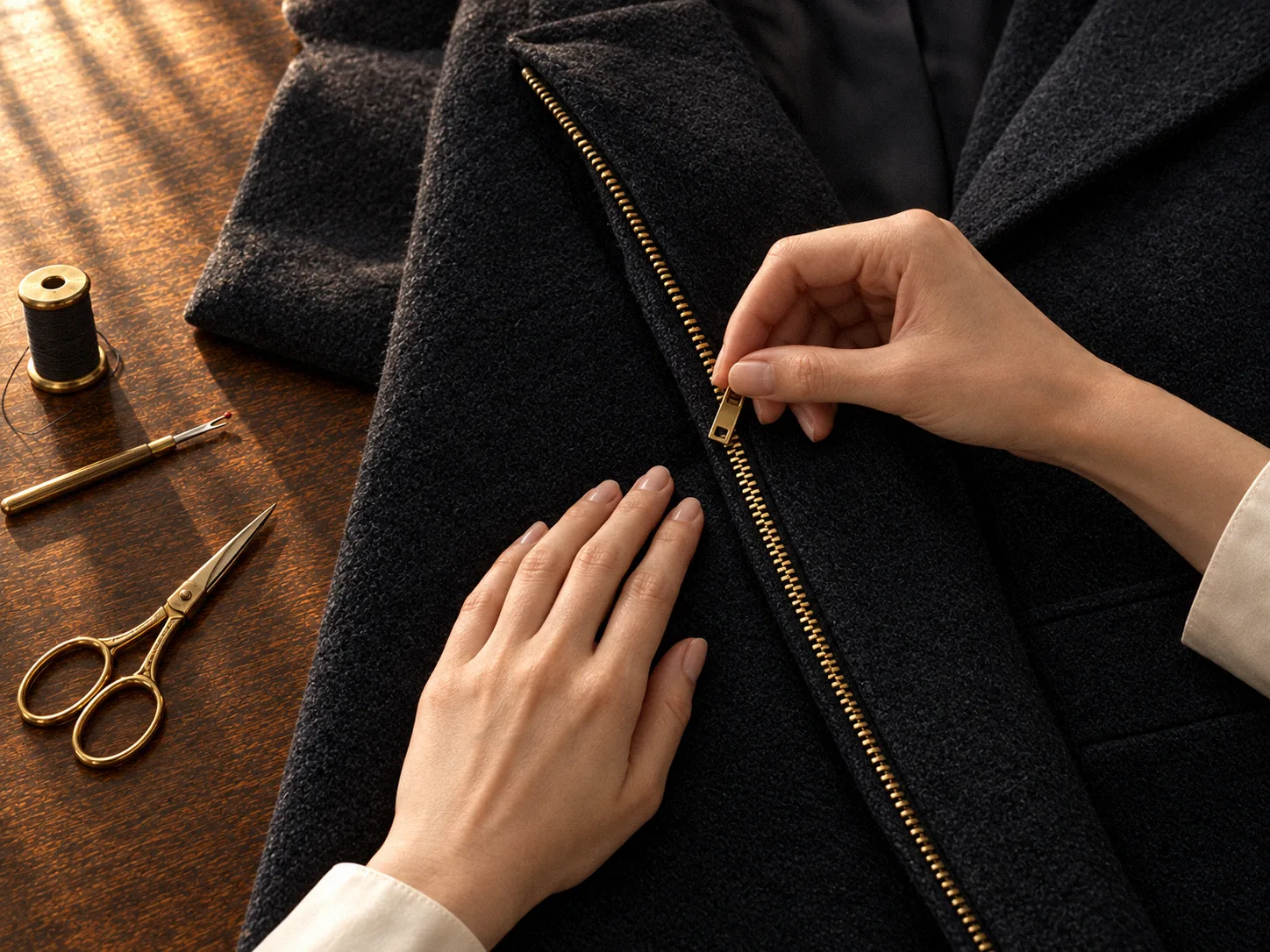
By use: for everyday outerwear, durable metal teeth and reinforced stitching come first; gowns and slender cuts take an invisible zip with the lining reinforced so the pull does not ripple the surface.
We check the zip colour, tooth gauge and seam allowance. Metal zips need reinforcement at both ends; invisible zips usually need the seam strengthened. If the allowance is too narrow or worn, the original look may not be fully kept; this is confirmed on the garment.
Link to this card · E112E113Anything to note before sending a pre-owned designer piece?
Check that the labels, serial and hardware markings agree, then look at the evenness of stitching and joins. Structural damage or signs of earlier repair affect what can be done.
We look for distorted shoulders, loose interfacing and weak points on seams. If the materials differ from the original maker, the repair materials and methods change too. We begin with the least invasive reinforcement and suggest rebuilding only when the structure cannot be recovered. Authenticity and detail are judged on the garment.
Link to this card · E113E114How can a garment be reinforced where it does not show?
A light backing, a non-woven interfacing or an overcast reinforcement on the inside of the lining or seam spreads the strain without changing the outside.
Typical areas are the armhole, hip and side seam; shoulders and waistlines may take a shaped reinforcement. Stretch fabrics need stretch reinforcement; fragile cloth needs a softer backing. Hidden reinforcement extends life but cannot correct an outline that has already distorted.
Link to this card · E114E115How is a colour repair blended naturally?
We first test how the cloth takes and loses colour, then build a gradient outward from the border in thin layers, progressively diluted, and adjust the surface sheen so the reflections agree.
Natural fibres and high-sheen synthetics need different methods and agents. If the cloth will not take colour or the difference is too wide, we suggest piecing or a detail that redirects the eye. Mercerised and other treated fibres vary widely and must be tested on the garment.
Link to this card · E115E116How is pilling on brushed fabric handled?
Pills are removed with a professional shaver or by hand with fine scissors, then the nap is brushed back in direction. If the surface fibre has broken, local work cannot fully restore the finish and another approach is discussed.
On valuable brushed cloth we test an inconspicuous area first to avoid an uneven nap or colour shift. Where the surface is broken, a bonded backing or matched covering piece may be used. Recovery depends on fibre density and depth of nap, judged in person.
Link to this card · E116E117Can the repair be documented for future reference?
Yes. The studio records the location, method and materials in its ESG repair record, with before-and-after photographs, for future care and any later repair.
The record notes whether patches, tape or enclosed seams were used, and your priorities for appearance or function. We suggest keeping the digital images and the service note together. It is the studio's own record, not a third-party certificate or warranty.
Link to this card · E117E118Can a small scratch on leather be repaired?
A shallow scratch can be filled, re-coloured in layers and the grain re-impressed to reduce the mark; deep cracks or lost surface need a replacement section with the edge hidden in a seam.
We identify cowhide, lambskin or coated leather, and a matt or glossy finish. Coated leather takes colour and embossing more readily; where natural leather has delaminated, it is stabilised with a structural adhesive before surface work. How nearly invisible it can be is judged in person.
Link to this card · E118E119How do I avoid further damage when sending a garment for cleaning?
Mark fragile areas and previous repairs, remove detachable metal or colour-sensitive trims, and include a note on the fabric and any repairs so the cleaner can take the right precautions.
Trims that cannot be removed should be wrapped and their position noted. Areas that have been locally dyed or bonded are sensitive to temperature and solvents and must be pointed out. The studio advises dry cleaning, cold hand washing or specialist leather care according to the fabric and repair.
Link to this card · E119E120How is the outline kept when replacing a lining?
Choose a lining of similar weight, slip and stretch, anchor the load points at the shoulder and side seams first, then sew in stages, adjusting how the lining hangs at the fitting.
Jackets with shoulder pads or shaped interlinings have those remade or fitted with removable pads to restore the fall. Formal suits and gowns prefer a more supportive lining; casual jackets a smooth, breathable one. If the old lining is bonded to the shell in places or the shell has distorted, the whole lining must come out and the result is confirmed at a fitting.
Link to this card · E120Thinking of a particular piece? Bring it, and we will read it together.
Back to the encyclopaedia