A gentleness that begins with one garment
We often think caring for the planet is a grand thing, so grand it feels removed from daily life. In truth it can be as small as a single garment. When you decide not to discard something still lovely, but to make it fit and be worn again, you are already doing something gentle — to the garment, to the people who made it, and to the earth.
At ESG Alter Studio we believe sustainability is not a sacrifice but a way of seeing. It lets us look again at the forgotten pieces in a wardrobe, and notice where they are still worthy.
A garment is a vessel for time
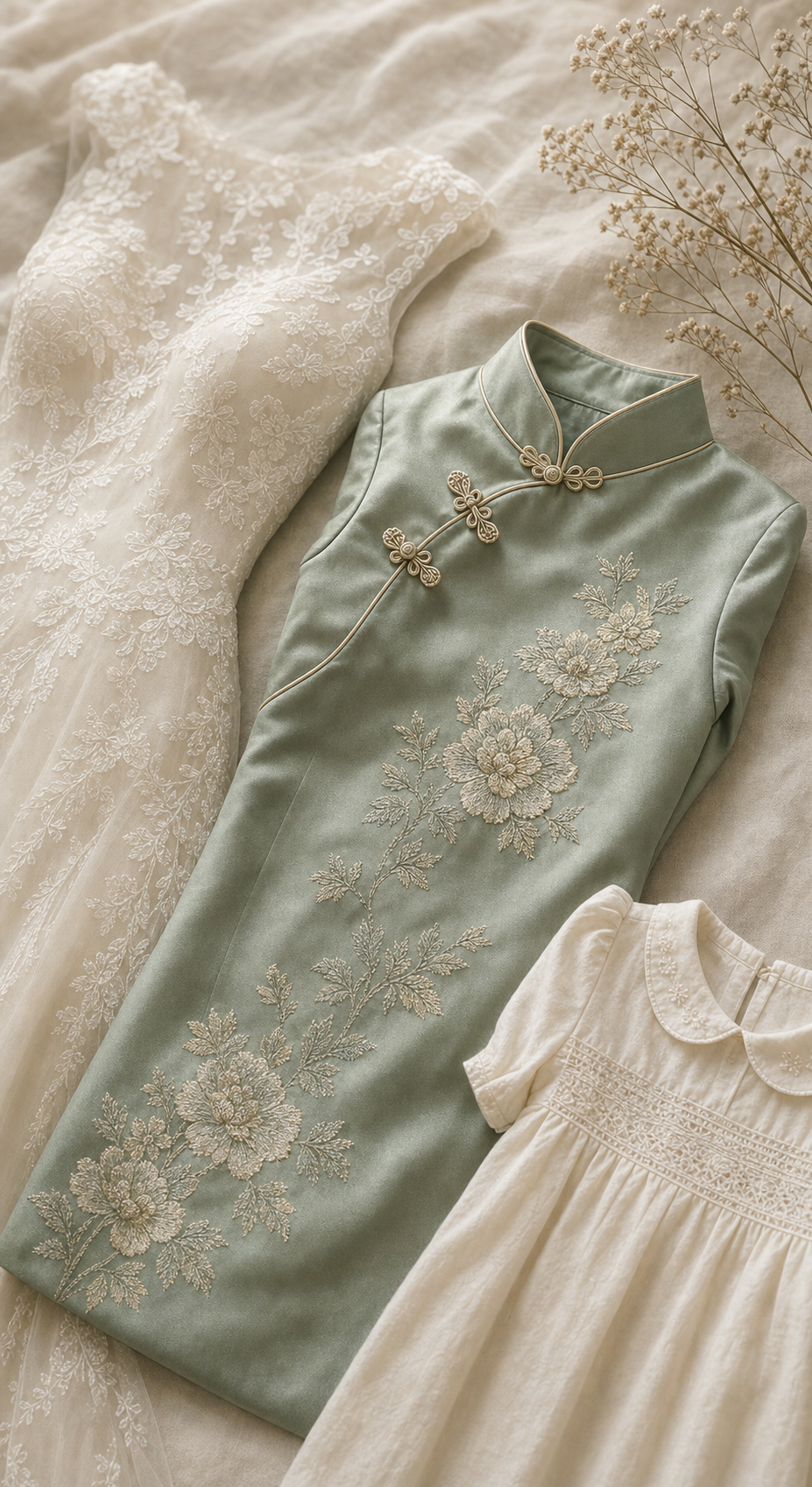
A wedding gown can, years later, give its lace and silk to a child's christening outfit. A mother's qipao, carefully adjusted, can become what her daughter wears at graduation. A blazer set aside for its shoulders can be restored and taken in, and return to everyday life.
On the surface these are adjustments of size and line. In truth they hand a memory back to daily life. What we do is not merely alteration — it is letting a garment keep telling its story.
Good alteration leaves no visible trace
When a garment reaches us, we first read it quietly — its fabric, its cut, its stitching, how it was once worn and once loved. This is what we call garment diagnosis. Only by understanding a piece can we decide what to keep and what to change.
Our aim is that the change looks as though the garment was always meant to be this way. When you put it on, you feel not 'altered' but 'finally right'. That takes couture craft and judgement — and real respect for the emotional value and support a piece holds.
Textile waste is closer than the wardrobe door
The volume of textiles discarded worldwide each year is staggering, and much of it is still wearable. Clothes are made quickly, bought quickly and discarded quickly — and a landfill does not turn away a garment because it is beautiful. Every rescued piece is a small act of resistance.
Choosing to alter does not mean giving up beauty or taste — quite the opposite. It is a more considered way to own clothing: a little less impulse, a little more continuation; a little less discarding, a little more mending. That is the direction we hope to walk with you.
A few typical ways a garment continues
Wedding gown into a christening outfit
Lace and silk from a long-treasured wedding gown, reworked into a christening outfit — linking two generations' most important days.
Mother's qipao for a daughter's graduation
A mother's qipao, refitted and gently restored, worn by her daughter at graduation — a memory carried forward.
A blazer restored to wear again
A blazer set aside for its shoulders and wear — reshaped, repaired and taken in — now the most-worn piece in the wardrobe.
Rebalancing an evening dress
An evening dress that never quite fit, its length and waistline rebalanced so it falls cleanly and naturally once more.