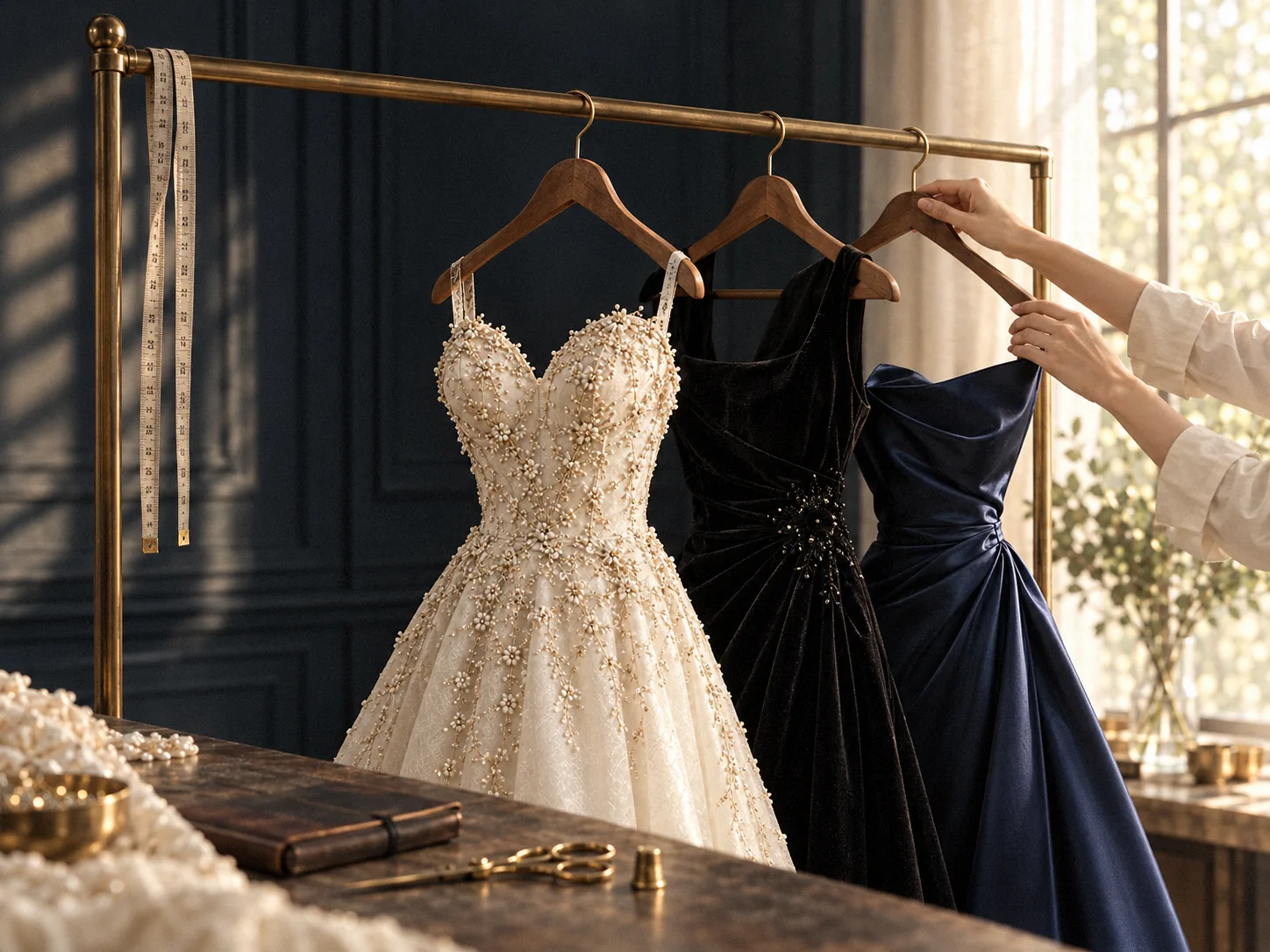
The two problems of a last-week alteration
A gown altered in haste usually meets one of two things. The first is a problem that only shows once the gown is opened: a brittle lining, a snapped bone, loose horsehair at the hem, a beaded base that has stretched. None of these is obvious when worn, but once work begins they cannot be ignored, and they take time to put right.
The second is decoration that must be handled piece by piece, with no time left to do it. Beads, embroidery and lace joins are all handwork; they cannot be hurried. The result is either coarse work or a compromise.
Staging the work and keeping a buffer is the one principle that prevents haste from doing permanent harm.
The initial assessment: what may be touched
The first step is always to read the garment. Can the fabric take unpicking and pressing? Is there seam allowance to work with? Does decoration sit close to the line of change? Is anything bonded rather than sewn? This step sets the length of the whole timeline. After it, you will know how many fittings are needed and roughly how much time to allow.
First fitting: base length and shoulder line
The first fitting settles the largest structures: hem length, shoulder line, waist position. Everything else rests on them. Until the shoulders are right, the neckline and bust will drift; until the waist is right, the skirt will not hang properly. So at this fitting we leave cuffs and decoration alone and set the frame.
Second fitting: details and movement
With the frame stable, the second fitting handles sleeve length, cuffs, bust shape, the slit, how the train is bustled. Bring the real shoes and accessories to this one, and move: sit, stand, raise the arms, turn, take stairs. A gown that looks right standing still is easy; one that looks right in motion is the aim.
Final fitting: refine, then stop
The last fitting is for refinement only: half a centimetre on the hem, the position of one button, the flatness of one line of stitching. After that comes finishing and hand-over. I keep the final week deliberately clear and do not take new requests. This is not stubbornness; changes in that week are the most likely to go wrong and the least possible to put right.
If the time truly is not there
Sometimes a gown only arrives a few days before the event and the full timeline is impossible. Then reversible steps come first: adjustments that do not damage the original, so that the gown can be worn with confidence on the day. Deeper changes wait until after the event. Finishing in stages serves the garment far better than doing everything in a few days.
Where the studio draws the line
Where a lining must be remade, extensive beadwork removed or the horsehair support reset, a single hand-over is rarely enough, and the real time can only be set after an in-person assessment. We will not skip necessary steps to meet a date.