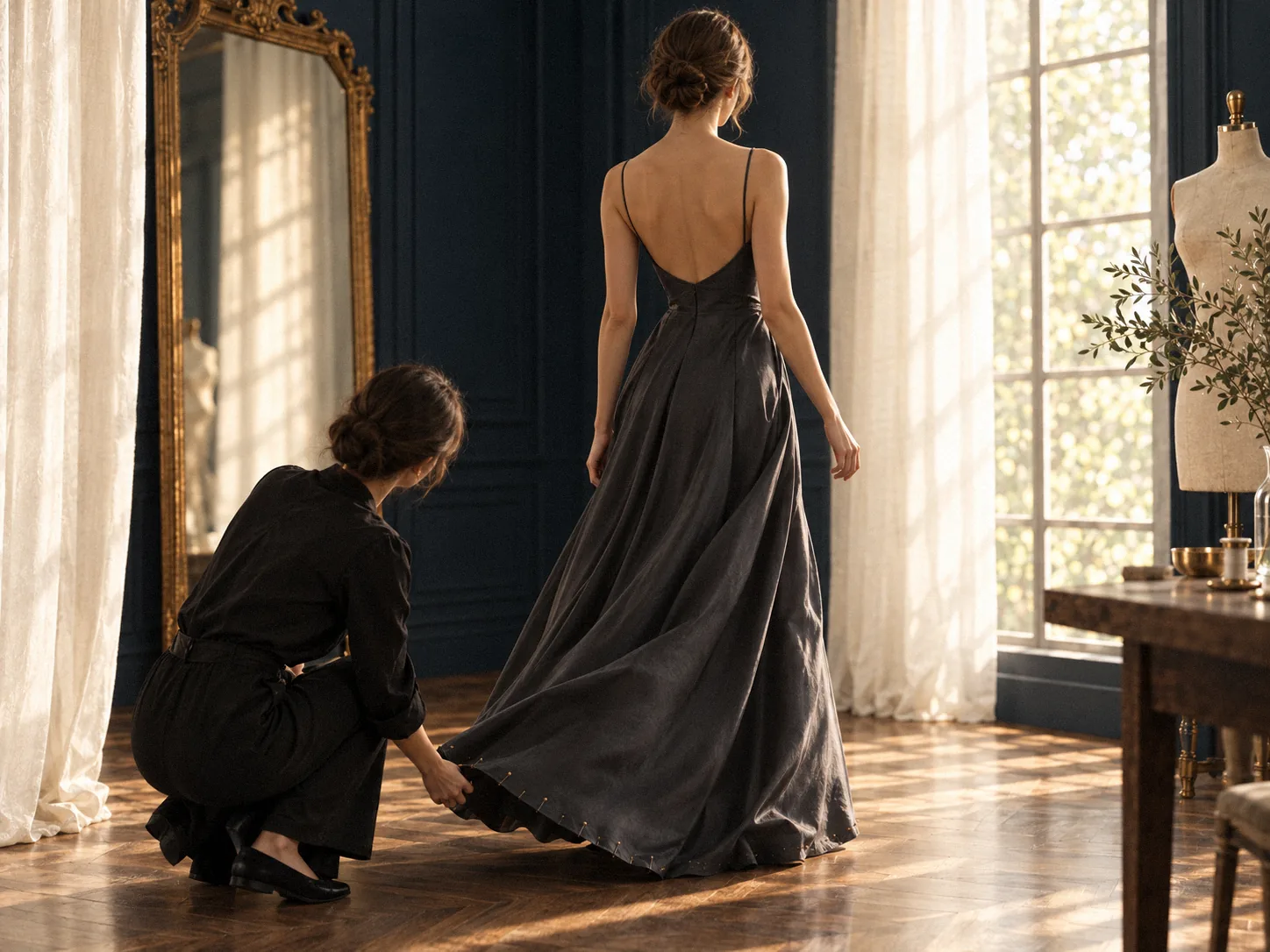
The fitting room is the quietest place in the studio. The door closes, the mirror is large, the light is not flattering. The first thing many people say when they step in is an apology for their body: I have put on weight; it has not been the same since the baby; my shoulders have dropped with age.
I usually do not respond to this. Not from indifference, but because it has nothing to do with what I am about to do.
The garment should yield to the person, not the other way round
On the hanger a garment is one shape; on a person it is another. My job is not to fit the person into that shape, but to teach the shape who this person is today. Bodies change. That is not a problem; it is a fact. The only question is whether the garment has kept up.
So I will ask you to walk
Walk, sit, raise your arms, turn, then bend to fasten a shoe. I am watching how fast the hem falls, whether the underarm pulls, whether the waist shifts when you sit, whether the whole garment climbs when you lift your arms. None of this can be measured with a tape or seen in a mirror.
If it is a gown, I also ask: will you dance that night? Sit for a long time? Go on stage? How high are the heels? I want to know how you will live that day, not only how you will stand.
Fit is a kindness
The best outcome of a fitting is that the client leaves the mirror having forgotten the apology. She is no longer thinking about her shoulders or her waist, because the garment has already thought about them for her. She simply stands a little straighter, and walks a little more freely.
In all my years of making clothes, this is really all I have wanted to achieve: that once dressed, a person can stop thinking about her body and think only about the day.