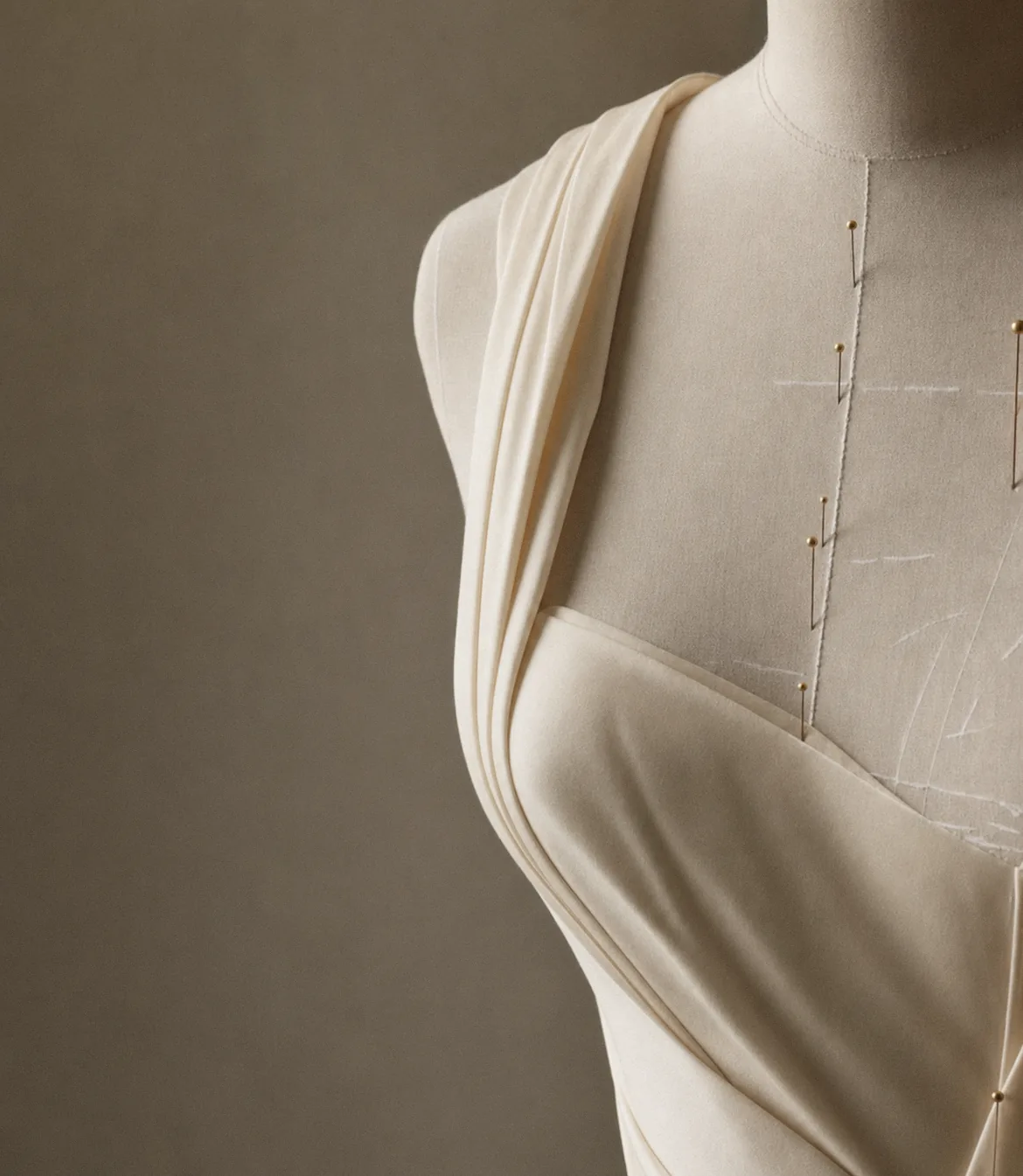
Condition one: how the material will respond
Silk, wool, cotton-linen and synthetics each respond differently to stitching, pressing and unpicking. Some fabrics can be re-sewn without a trace; others keep every needle hole once opened. We look at this first, because it sets the boundary for every option that follows.
Condition two: whether the structure allows it
Lining, interfacing, seam allowance and the seams that carry load decide how far a garment can be opened without breaking its proportion. A suit's shoulder, a gown's bodice, a qipao's collar and slits are where structure is densest, and where restraint matters most.
Condition three: how you will wear it
A gown worn only on formal occasions and a jacket worn every day do not need the same strength or the same standard of alteration. Purpose changes the method we use, and how much we suggest you invest.
Condition four: what it means to you
If a garment carries an important memory, we usually lean toward keeping it as it is, with discreet repair or inner reinforcement. If the meaning lives in one detail, that detail becomes the part we protect absolutely in any transformation. Emotional value is not a sentimental footnote; it is a design condition.
Risks are explained before we begin
Cloth too thin; a lining that cannot be opened without harming the outer decoration; a pattern that cannot be rejoined. When the risk is too high we offer alternatives: local piecing, local reinforcement, or a close material used as a visual bridge. Every stage is taken in small, checkable steps, so that little is irreversible.
The final decision is a balance of function, appearance and feeling, not the victory of any one of them.